
A Comprehensive Look at How Posture Affects the Shoulder
Shoulder pain is an all-too-common complaint, making routine activities like lifting, typing, and even sleeping difficult. It seems like every week we get a patient who comes to us with shoulder pain related to poor postural habits.
A lot of people know the old song about how the foot bone is connected to the knee bone (and the knee bone is connected to the thigh bone, and so on). In the world of physical therapy, we call this regional interdependence. This means something in one area of the body is affecting another area. As the song says: it’s all connected.
Well, this is definitely true when it comes to the functioning of our shoulder joints. Poor postural habits and prolonged slumped postures put the shoulder in a vulnerable position, making it susceptible to pain or injury. The good news is our therapists at ESPT have extensive training in identifying all the factors that are contributing to your shoulder pain and, most importantly, how to resolve them, one by one!



How Posture Impacts the Shoulder
One significant factor contributing to shoulder pain is Upper Crossed Syndrome (UCS). This condition is characterized by postural changes that affect how the muscles of our upper back and shoulder girdle work, which in turn affects the normal movement patterns in the entire upper portion of the body.
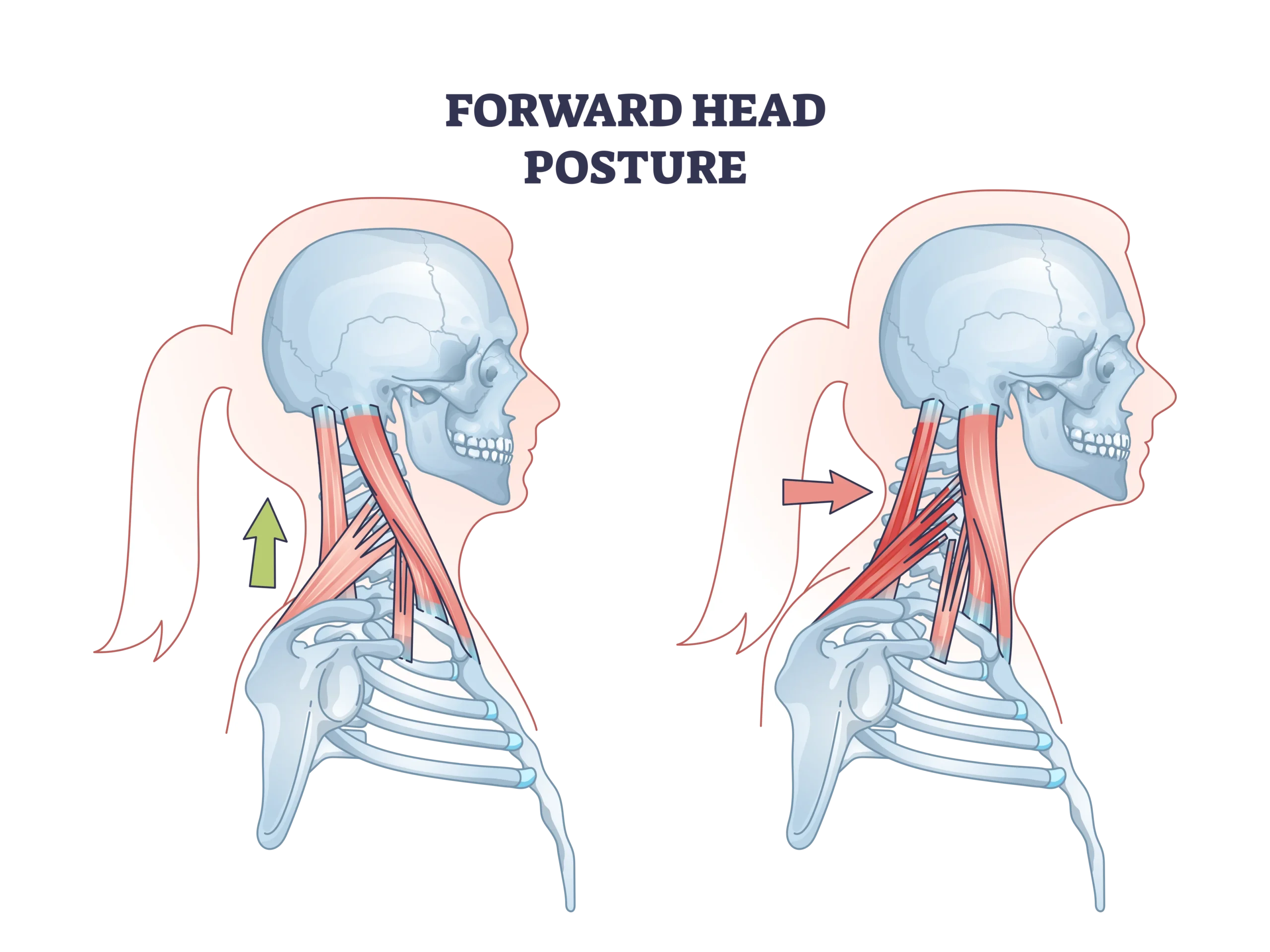
The classic signs of Upper Crossed Syndrome include:
- Forward head posture: The head is positioned forward in relation to the shoulders.
- Rounded shoulders: The shoulders are rounded forward, causing the upper back to appear hunched.
- Increased thoracic kyphosis: The upper back has an increased curvature, leading to a rounded appearance.
- Protracted shoulder blades: The shoulder blades are positioned more forward and away from the spine.
- Weak deep neck flexors: The muscles at the front of the neck that help stabilize the head are weak.
- Tight pectoral muscles: The muscles in the chest area are tight and may contribute to the rounded shoulder posture.
- Weak scapular stabilizers: The muscles that stabilize the shoulder blades are weak, leading to altered movement patterns.
These issues often lead to shoulder pain, limited range of motion, and impaired muscle function. Although the signs are common in a lot of people, not everyone with these signs will have the same symptoms. This is why it is essential to consult one of our physical therapists to identify your specific needs and design a tailored treatment plan that addresses your situation.
Exercise of the Month
Prone Hip Extension
(Glutes, Lower Back)
Start by lying face down on the floor. Gently tighten your abdominals/core. While keeping your knee straight, squeeze your butt muscle and slowly raise one leg off the ground. Hold for 2 seconds. Slowly lower and repeat with the other leg. 3 Sets, 10 Reps.
The Role of Physical Therapy in Resolving Your Pain
The first step to resolving your shoulder pain is a comprehensive evaluation. Our physical therapists will conduct a thorough history and physical exam that includes an assessment of your posture as well as the function of your shoulder blade musculature to identify any obvious changes to muscle activation and movement patterns.
Based on the assessment, our physical therapists will design tailored exercise regimens that address not only muscle length and strength but also neuromuscular factors. This could lead to more lasting relief and functional improvement.
Our team uses a functional approach that is rooted in neurology. We consider the interaction between your nervous system, biomechanics of your spine and shoulder joints, as well as muscle function. This allows us to not only identify and address any imbalances in muscle length and strength, but also from neuromuscular factors like muscle recruitment.
These exercises may include work on your spinal joint mobility and strengthening exercises to correct any postural dysfunctions contributing to your conditions. Our team spends a lot of time educating you about how you are holding and moving your body to ensure you have the tools to train your body in the proper movement patterns that help to correct imbalances and offer lasting relief.
Sources: https://trialsjournal.biomedcentral.com/articles/10.1186/s13063-020-4159-9, https://www.jospt.org/doi/10.2519/jospt.2020.0501, https://www.jospt.org/doi/full/10.2519/jospt.2020.8498
Take the First Step Towards Lasting Relief Today
If you’re experiencing persistent shoulder pain, limited range of motion, or discomfort in your upper body, the time to act is now. These signs are not just distressing; they can have a long-term impact on your quality of life and overall well-being.
Reach out to ESPT today for a comprehensive assessment and personalized treatment plan designed to restore balance to your muscles, improve your posture, and, most importantly, alleviate your pain!

Fresh & Healthy Salsa Recipe
- 4 ripe tomatoes
- 1 red onion
- 3 garlic cloves
- 1 jalapeno (stemmed and seeded)
- 1/3 cup fresh cilantro
- 3 tbsp fresh lime juice
- 3 tsp ground cumin
- 1 1/2 tsp salt
- 15 oz crushed tomatoes (1 can)
- 4.5 oz diced green chiles (1 can)
Place the fresh tomatoes, onion, garlic, peppers, cilantro, lime juice, cumin, and salt in a food processor. Pulse until the contents are blended to desired consistency. Pour in the crushed tomatoes and green chiles. Puree until mostly smooth. Refrigerate until ready to serve.