
The Difference Between Back Pain and Sciatica
Have you been struggling with persistent back pain and been told it’s because you have sciatica? Does your pain travel down your leg? It can be challenging to understand when it seems like even the medical community disagrees with what to call your condition. Fortunately, at Exercise Sport Physical Therapy, we can clear it up for you and set you on the right path for relief!
As many as 80% of adults in the United States struggle with back pain at some point in their lives. Back pain can start for a variety of reasons such as being in a car accident, bending to pick up something off the ground after a long car ride, and for some, just waking up in the morning seems to be the cause.
Unfortunately, up to 90% of low back pain diagnoses are non-specific. This means that not only do people suffer from back pain, but the exact cause may be difficult to identify. Confusion about the source of pain is complicated enough, but some of the confusion is in the diagnosis terminology.
To clarify what you need to do to alleviate your pain, your physical therapist can categorize your pain, so you understand what is happening and, more importantly, what to do about it!
Call Exercise Sport Physical Therapy today and schedule an appointment with one of our spine experts to get the answers you need to get back to the life you want to live!


Understanding the difference between back pain and sciatica
Back Pain
Being educated about your back pain can help you make the right choices to overcome it as quickly as possible. One of the biggest problems with back pain is that it persists. One day it is here; the next day, it is gone. Not understanding why it comes or how to make it go away will lead many people to deal with back pain for years on end without seeking help.
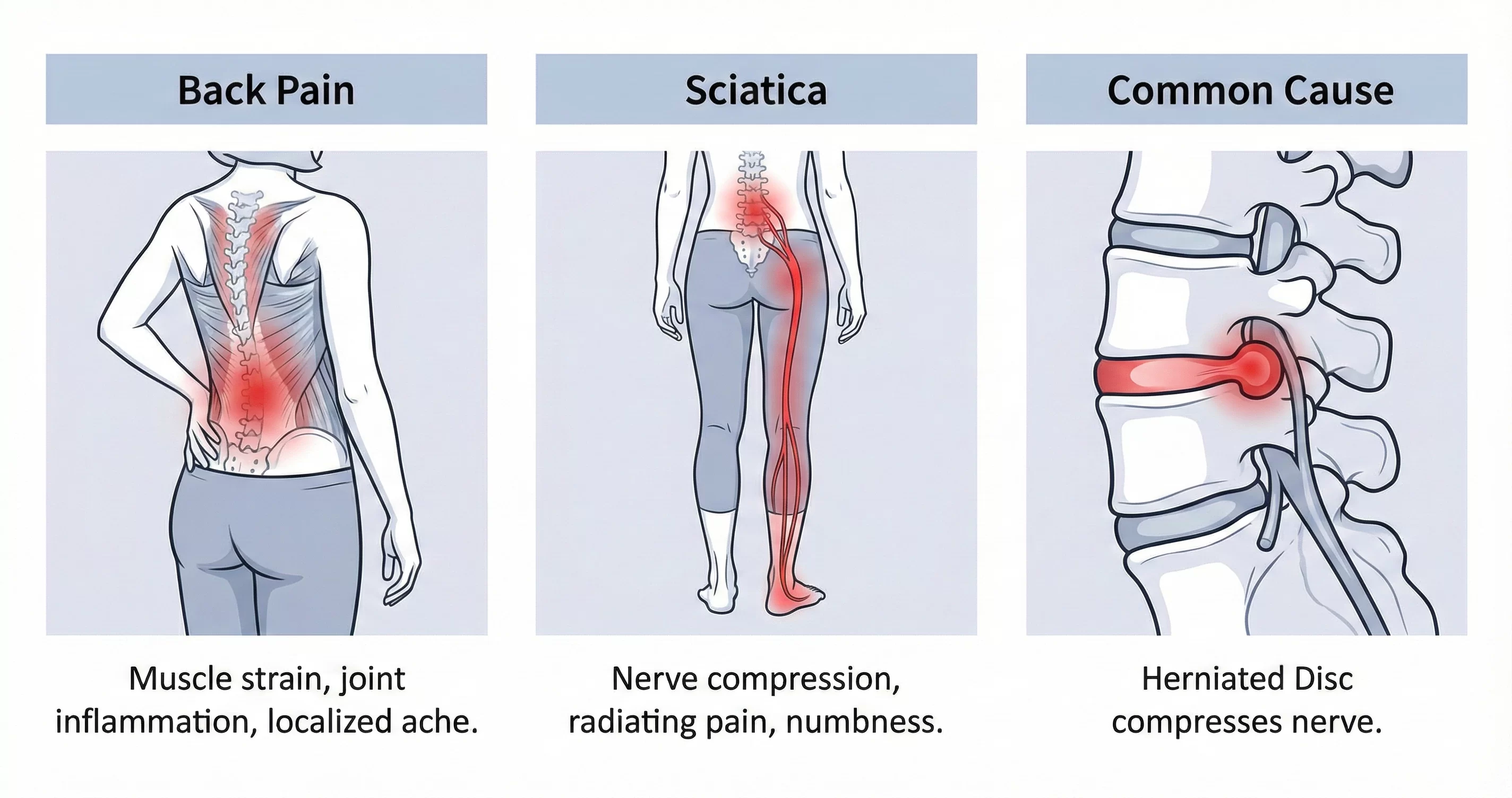
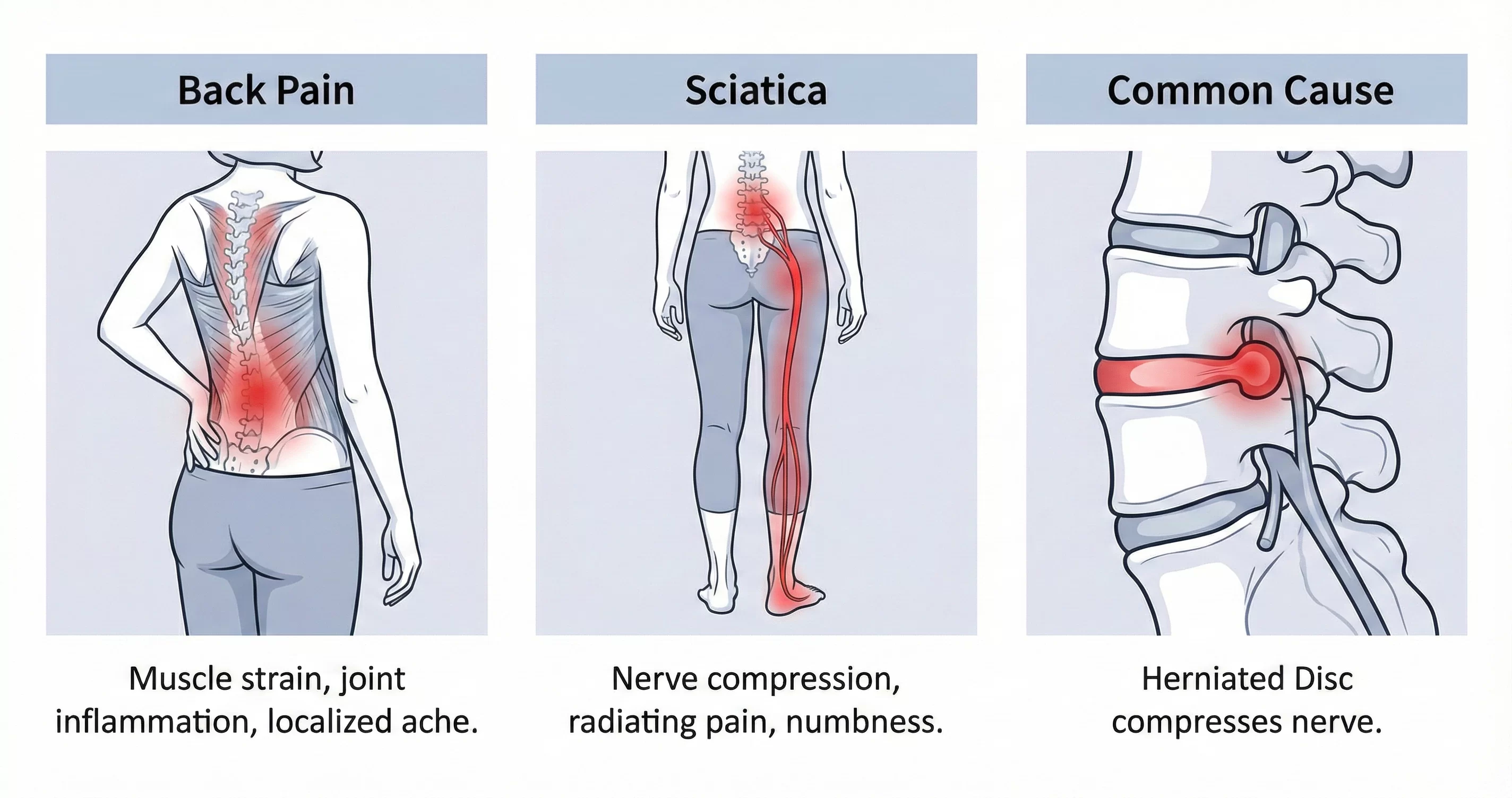
Back pain is pain that is felt in the lower back and buttocks. Typically, back pain develops as a result of strain or sprain, prolonged postures, or sometimes for no apparent reason. The different mechanisms do not change the essential characteristic defining lower back pain; it is felt in the lower back and/or buttocks.
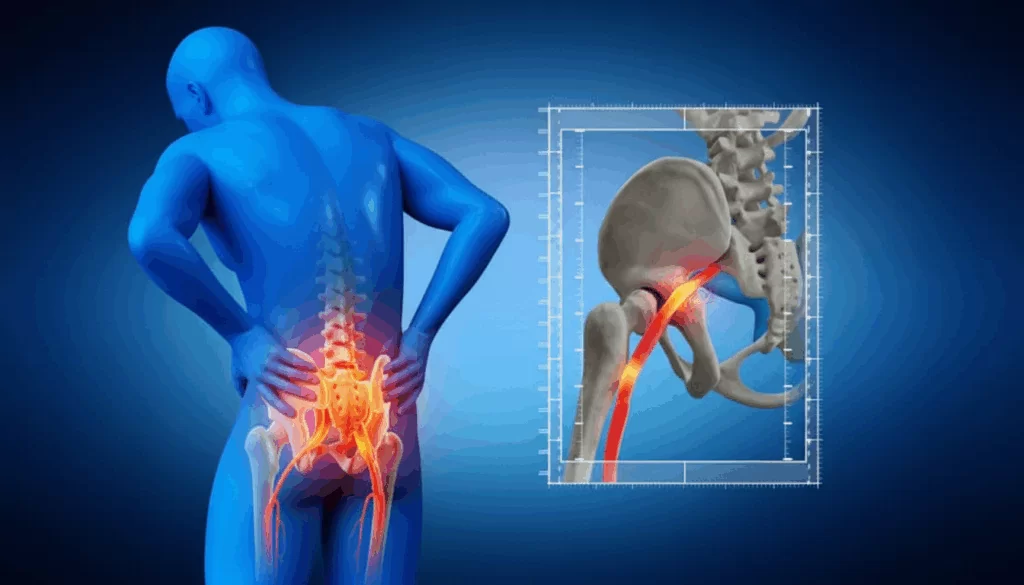
Often people are told they have sciatica when they experience pain in the buttock, but sciatica is a different classification and has its own characteristics. Sciatica is often a debilitating condition that is a result of compression or inflammation of the sciatic nerve. The condition most commonly is associated with pain radiating down the leg. It can be so severe that people struggle to do everyday activities.
Sciatica pain develops in the nerves that exit the spinal canal and travel into the legs, and so while the pain itself technically starts in the back, the experience of the pain is felt in the leg(s). What’s more, sciatica pain doesn’t always develop like pain in the traditional sense. Sciatica can be tingling, numbness, and weakness in the leg(s).
Sciatica
Often people are told they have sciatica when they experience pain in the buttock, but sciatica is a different classification and has its own characteristics. Sciatica is often a debilitating condition that is a result of compression or inflammation of the sciatic nerve. The condition most commonly is associated with pain radiating down the leg. It can be so severe that people struggle to do everyday activities.
Sciatica pain develops in the nerves that exit the spinal canal and travel into the legs, and so while the pain itself technically starts in the back, the experience of the pain is felt in the leg(s). What’s more, sciatica pain doesn’t always develop like pain in the traditional sense. Sciatica can be tingling, numbness, and weakness in the leg(s).
How physical therapy can help you find relief
If you are experiencing back pain or sciatica and haven’t talked to a physical therapist about your concerns, then now is the time to take action. Working with a physical therapist can help you understand what you are dealing with and, most importantly, how to resolve it once and for all!
Whether you come to physical therapy with lower back pain or sciatica, your physical therapist will perform a thorough physical examination and provide you with solutions that work based on the finding.
Education
Understanding what you are experiencing and how to manage it can help you be proactive and find a solution. Understanding what is going on, and more importantly, what you can do about it, is one of the most effective solutions. It may seem insignificant, but it turns out to be one of the most important steps towards a solution.
Manual therapy
Physical therapists often use manual therapy for their patients with sciatica. Manual therapies include a variety of techniques that move one or more joints within normal ranges of motion to improve spinal joint motion or function. It can also include soft tissue techniques that help to alleviate pain and allow for more mobility and improved function.
Exercise therapy
Supervised exercises are vital to a successful outcome. A physical therapist will tailor your exercises, monitor you, and progress you based on your individual needs. Supervised exercise therapy includes directional exercises, proper postural exercises, nerve mobilization, or strength exercises.
Working with a physical therapist is, hands down, the best thing you can do when you are looking to overcome back pain or sciatica. A physical therapist can identify the cause of the back pain/sciatica and present you with helpful strategies to reduce your pain, strengthen your back and improve your function.
Exercise of the Month
Modified Piriformis Stretch
(Hips, Glutes, Sciatic Nerve)
Start by lying on the ground with knees bent and feet flat on the floor. Cross one ankle over the opposite knee and gently apply pressure to the top knee to deepen the stretch. Hold for 30 seconds. Slowly lower your leg back to the floor and repeat on the other side. 3 Sets, 2 Reps.

Roasted mackerel with Baby potatoes and beetroot
This fishy dish featuring mackerel is a good source of omega-3 fatty acids, which can help reduce inflammation and lower blood pressure.
Ingredients:
- 225g (8oz) baby potatoes, scrubbed and halved
- 1 tsp canola oil
- 1 clove garlic, crushed
- 200g (7oz) fresh mackerel fillets (or trout or salmon)
- Finely grated zest and juice of ½ orange
- 1 tbsp fresh flat-leaf parsley, chopped
- 100g (4oz) cooked beetroot, sliced or diced
- 50g (2oz) fresh baby spinach
For the dressing - Finely grated zest and juice of ½ orange
- 2 tsp horseradish sauce
Instructions
Preheat: Set your oven to 392°F.
Roast Potatoes: Toss the potatoes in the oil and crushed garlic. Arrange them on a non-stick baking tray and roast for 20 minutes, turning them halfway through.
Add Fish: Push the potatoes to one side of the tray and add the fish fillets, skin-side down. Drizzle with the orange juice and scatter the zest and chopped parsley over the top. Return to the oven for 10 minutes.
Prepare Salad: Meanwhile, pile the beetroot and spinach onto a serving platter. In a separate bowl, mix together your dressing ingredients.
Assemble: When cooked, remove the tray from the oven. Peel the skin from the fish and break the flesh into rough chunks. Spoon the warm potatoes and flaked fish into the center of the salad.
Serve: Drizzle with the dressing and serve immediately.
Call our clinic today
If you’re experiencing back pain or sciatica, don’t wait. Call Exercise Sport Physical Therapy today and schedule your first appointment to have your condition assessed and get the guidance you need to get back to life!