

Determining The Origins of Your Pain
Are you tired of dealing with pain day in and day out? Have you been struggling with persistent pain for months or even years, and it’s taking a bigger and bigger toll on your life? For some people with pain, the simplest tasks are now major challenges, and over-the-counter and/or prescription pain meds don’t seem to provide any relief.
Unfortunately, this is a common experience for millions of Americans. Recent research has found that over 100 million people suffer from persistent pain each year. This is where Exercise Sport Physical Therapy steps in.
At Exercise Sport Physical Therapy, we understand that pain comes in various forms, affecting people in unique ways. We’re committed to staying at the forefront of the latest advancements in pain management, ensuring that our patients receive the best care possible.
We know that pain can be overwhelming, but we’re here to remind you that there is hope!
You Have a Choice in Your Care
When your doctor recommends physical therapy, you get to choose where to go, and at Exercise Sport Physical Therapy, we’re ready to help you get back to doing what you love.
Physical therapy at independent outpatient clinics like ours is often a more affordable option than hospital-based or physician-owned practices. We provide high-quality, personalized one-on-one care—often with less out-of-pocket expense for our patients.
Thanks to Direct Access, you can often schedule an evaluation without a doctor’s referral, so you can start your recovery or performance program right away. If your doctor does determine that physical therapy is needed, don’t forget: you can tell them you choose Exercise Sport Physical Therapy as your provider.
Whether you’re recovering from a sports injury, managing pain, or looking to improve strength and mobility, our team creates a plan tailored to your goals. Your progress, comfort, and return to activity are our top priorities.
Next time your doctor recommends physical therapy, remember: you have the right to choose your clinic.

Understanding Different Types of Pain
Pain is a complex sensation, and it can be categorized into five main types, each with its own characteristics and underlying mechanisms. Here’s an explanation of these types:
- Nociceptive Pain: This type of pain results from the stimulation of specialized nerve sensors called nociceptors. Nociceptive pain is often described as sharp, aching, or throbbing and is typically localized. It can be acute, like when you accidentally bump your knee, or chronic, as seen in conditions like arthritis.
- Central Pain: Central pain arises from dysfunctions within the central nervous system (i.e., the brain and spinal cord). Central pain starts inside the central nervous system itself. Examples include fibromyalgia and pain associated with spinal cord injuries.
- Neuropathic Pain: This pain type is caused by nerve damage or dysfunction. It may manifest as burning, tingling, or shooting sensations. It is typically associated with conditions like diabetic neuropathy or nerve injuries (i.e., sciatica).
- Psychosocial Pain: Psychosocial pain involves mental and/or social factors influencing pain perception. Stress, anxiety, depression, and social support (or lack thereof) can significantly influence how pain is experienced. It is not directly tied to tissue damage but is due to mental and emotional states.
- Movement System Pain: This pain is directly related to the biomechanics of movement, such as issues with joint positions or control and/or muscle imbalances. Physical therapists often work with this type of pain, prescribing targeted exercises to correct movement dysfunctions contributing to the discomfort.
Regardless of the type of pain you’re dealing with, our therapists will work with you to identify and target the sources of your pain. We’ll use gentle techniques and exercises to address these issues and help you find relief.
Exercise of the Month
Standing External Rotation
(Shoulders, Rotator Cuff)
Start by standing up straight with the arm to be exercised hanging by your side. Bend that elbow to 90 degrees. Anchor an exercise band at about the height of your belly button and hold the free end of the band in the hand of the arm you want to work. Make sure you are standing so that the hand holding the band is farther from the anchor than your other arm. Place a towel between your elbow and your body. Lightly rotate your working forearm away from your body, pulling the band and keeping your arm bent. Slowly let the band pull your arm back. 3 Sets, 10 Reps. (Materials needed: resistance band, towel)
A Friendly Year-End Reminder
Most insurance plans start fresh on January 1, which means deductibles reset and benefits renew.
If you’ve been thinking about scheduling therapy, continuing a program, or checking in on lingering aches or pains, now is a good opportunity to get it on the calendar. Planning ahead can help you stay consistent with your care and make the most of the coverage you’ve earned this year. If you’re unsure about your remaining benefits, your insurance provider can give you the most up-to-date information.
Finding Relief from Pain with Physical Therapy
When you come to a physical therapy session at Exercise Sport Physical Therapy, you’re taking a significant step towards finding relief from pain and improving your overall well-being. Your first session will typically begin with questions about your medical history, the specific nature of your pain, its location, and any factors that make it better or worse.
After discussing your medical history, your therapists will evaluate your posture, muscle strength, range of motion, and any areas of tenderness. They’ll also assess your movement patterns to identify any abnormalities or dysfunctions.
Based on the information gathered during the evaluation, your physical therapist will work to identify the underlying issue causing your pain. This may involve determining the type of pain (e.g., nociceptive, neuropathic, or movement system-related) and its primary sources.
Once your therapist has a clear understanding of your condition, they will create a personalized treatment plan tailored to your needs. Our treatments may include manual therapy techniques to release tension and improve joint mobility. Exercise is another crucial component, tailored to your specific needs and designed to correct any movement dysfunctions. Education plays a vital role in empowering you with the knowledge and tools to manage your pain effectively.
Patients are often fearful of making their condition worse. As a result, they often either do nothing or get so frustrated that they ignore clear warning signs and push through. In either case, the result is more suffering. The key is to find a balance in the middle, where you do just enough to improve but not enough to make it worse.
At Exercise Sport Physical Therapy, our therapists will help you find that balance, guiding you through the steps you need to take to feel good again!
Sources: https://www.ncbi.nlm.nih.gov/pmc/articles/PMC6256939/, https://www.ncbi.nlm.nih.gov/pmc/articles/PMC6203285/, https://www.jospt.org/doi/10.2519/jospt.2016.0602, https://www.researchgate.net/publication/335681194_Pain_Theory, https://www.ncbi.nlm.nih.gov/books/NBK545194/
Getting to Know You – The Heart Behind the Therapist
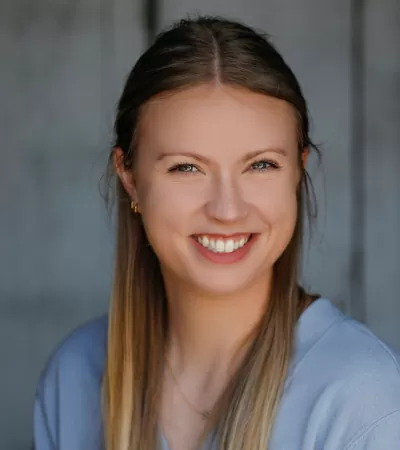
Jenna Aldridge, Physical Therapist
Getting to Know Jenna
What inspired you to become a physical therapist?
I wanted to be in the health field because I love helping people. However, I don’t like blood and guts, so people tend not be bloody in PT.
What’s your ‘why’?—the deeper reason you chose this profession and what keeps you passionate about it?
I am passionate about education and helping people reach their maximum potential. I don’t want anyone to miss out on living their best life.
Who has influenced your career or character the most, and how?
My parents. They have taught me how important it is to care about people and to help in any way I can. They taught me to have the goal to always be selfless and kind.
What’s one lesson your patients have taught you?
I have learned to never assume anything about people. Be curious and open minded, because people will always surprise you.
How would you describe your approach to patient care in three words?
Collaborative, educational and just a little goofy.
Professional Purpose & Passion
What type of patient or diagnosis do you feel most passionate about treating, and why?
Pelvic floor. I feel like there is a lot of general PF health information that people don’t know or understand and I love being able to provide this information to people and see how it changes their lives.
What do you love most about helping patients feel better, get better, and live better?
I love hearing the stories from my patients has they get back to activities that they haven’t been able to do before. I love to see their faces as they light up when they get to see results of their hard work.
What’s one area of PT you’ve recently grown in or are excited to learn more about?
Pelvic floor.
What’s your favorite success story, a moment when you saw a patient truly flourish?
I had a patient who had been having knee pain for many years and he was a drummer in a polka band. We worked together for several months, and finally he was able to sit through several hours of playing with no pain. I was able to go and watch his band play and he looked like he was having the time of his life.
LSCM in Action – Love • Serve • Care More
What does ‘Love, Serve, Care More’ mean to you in your daily work?
It means being willing to go the extra mile to provide care for our patients that they need and deserve to achieve their maximal potential.
How do you go the extra mile for your patients or teammates?
Utilizing every and all resources at my disposal to provide care for my patients. Reaching out to my co-workers when I am stuck and figuring out what else they might need, even if that is not physical therapy. I also try to provide the same support for my teammates if they are needing extra brain power to think through a case.
How do you make sure every patient feels seen, heard, and cared for?
Usually, at the evaluation, I take a portion of our time to set my computer aside and look directly into my patients face while they explain what they are struggling with and what they are hoping to get out of therapy. I try to repeat back to them what I heard as well as explain my plan for them so we can work together to achieve their goals.
Can you share a small but meaningful thing you do that might surprise patients?
I have worked with a lot of patients who have had total knee replacements. One milestone is when they can finally get a full revolution on the recumbent bike. I tell them this is something we will work towards at the beginning and that once we get there, that means we have made a huge amount of progress in their range of motion. When that day finally comes, I will jump up and down and yell how amazing they are. We will have a little 10 second dance party to celebrate their progress. It is fun and always makes them laugh.
Relationships Built on Trust – Striving to Be the Best
What’s one way you’ve created a memorable moment for a patient?
When treating a patient who was under-going cancer treatment, I brought in balloons and treats when it was his 1 year anniversary since his diagnosis.
How do you personalize care to make each patient’s experience special?
I do my best to remember what patients do outside of therapy (hobbies, job, family events, etc) and while we work on exercises, I ask about things they have told me, so they know that I am listening.
What’s one story where you or your team went above and beyond for someone?
I was working with a woman who had multiple sclerosis and had lost the function of her legs. She knew that she would never be able to stand independently again, but still loved the feeling of being upright. It took a lot of set up and strapping her legs to her chair, my legs and the parallel bars, however I made sure to make time at every session to help her stand up for a few minutes. It was physically exhausting for both of us, but every session she would be on the verge of tears when she would stand because it was so meaningful to her.
Connection
When a patient first meets you, what do you want them to know about the journey you’ll take together?
I think of the first day as getting to know them as a person, not as a patient. I want to know all about them, their life and their priorities. I say the same thing to every patient when I greet them in the waiting room which is “Hi, I’m Jenna! I’m gonna be hanging out with you today!” because that is what I want it to feel like them. Not work or another medical experience. Just two people hanging out and collaborating to help them get better.
How do you help patients see themselves as the hero in their recovery story?
I make sure to emphasize every success and highlight all their work and commitment that went into that progress.
What’s one piece of advice you’d give a patient starting PT for the first time?
Tell your therapist everything. Every piece of information holds so much value.
How do you celebrate progress and wins with your patients?
Dance parties.
Bringing Joy, Gratitude, & Purpose
What’s a ‘favorite moment’ — a time you made a lasting impact by simply caring more?
How do you bring positive energy to your day and your patients?
I have a personal goal of giving every person I come into contact with at least one compliment every day. Regardless of how their PT session goes or how they are feeling, I will comment on something that I think is awesome about them.
How do you show gratitude to your patients or teammates?
I try to never let any kindness go unanswered. Anytime someone shows me kindness or does something for me, I immediately am trying to find a way to “out bless” them to demonstrate how much I appreciate them.
What motivates you to bring your best self to work each day?
I Everyone deserves to have an amazing day, every day, and I my goal to is be one point on the list of positive things that happened to them that day.
Outside the Clinic
What do you enjoy doing outside of work that helps you recharge?
Working out, hiking, spending time with family and friends, reading and mindfulness.
What’s one fun fact about you that most patients wouldn’t guess?
I grew up doing ballet and horseback riding.
What’s your favorite way to stay active and healthy?
Going on long hikes or jogs with my favorite people and my dog.
Favorite hobby, sport, or weekend activity?
Going to the Shawnee mission dog park and swimming with my dog.
Favorite place to travel, eat, or relax in Kansas City?
Favorite coffee shop: Whistle Stop in Lee’s Summit
Flourishing – Personal Growth & Inspiration
What’s a quote, book, or mindset that inspires you?
“There is only one corner of the universe you can be certain of improving, and that is your own self. So you have to begin there, not outside, not on other people.” ― Aldous Huxley
How do you invest in your own development and growth?
Reading self-improvement books, mindfulness practices, counselling, continuing education.
What does ‘flourishing’ mean to you in your career and life?
Not being limited by fear of judgement. Allowing myself to grow into the most genuine version of myself to live my best and biggest life.
What’s one thing you’ve learned recently that’s made you a better person or therapist?
Not everyone needs to talk. I have a lot of patients who want to tell me everything about them and what is going on in their life. However, some patients I really struggle to maintain a conversation with throughout their session. However, not everyone wants to talk, so I have learned to respect the quiet. I thought this would make them uncomfortable or feel like I am ignoring them, however I have has many more patients tell me that they feel so comfortable with me after I made this change.
From the Heart
What’s one message you’d love to share with our patients and community?
I would love to help you improve on your functional abilities to get you living your best life. And I will do my best to make it fun along the way.
In one sentence — why do you love being part of the College Park PT & ESPT team?
Because I feel very supported to learn something new everyday and become the best therapist I can be.